Elisabeth Nicula
Possible Outcomes
May 15 – June 27, 2026
Reception Friday, May 15, 5-8pm
How to Know the World
We could walk across the city of San Francisco.
We could forget to remember the art world.
We could finish our spaghetti and meatballs and not have nightmares.
All sorts of outcomes are possible, after all.
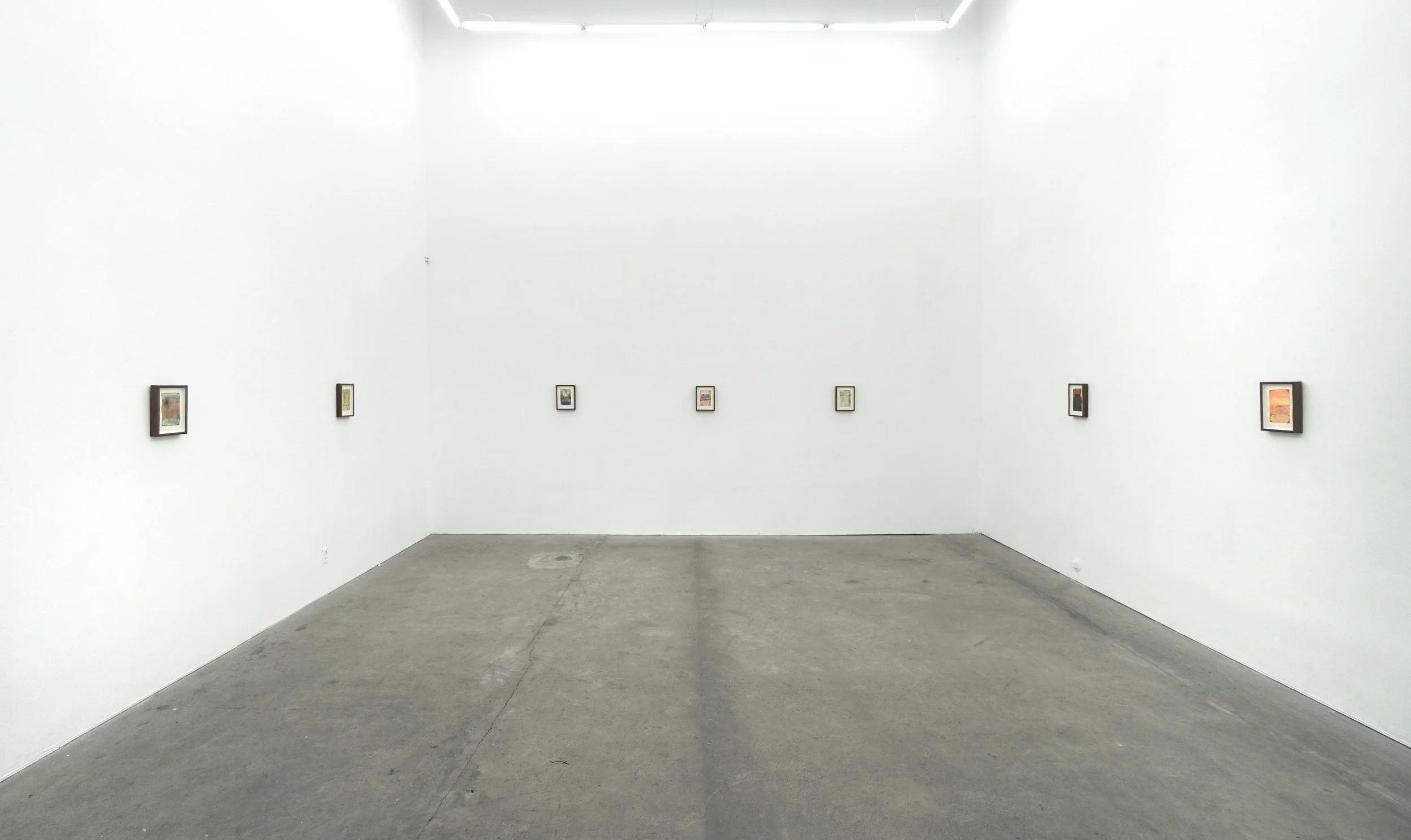
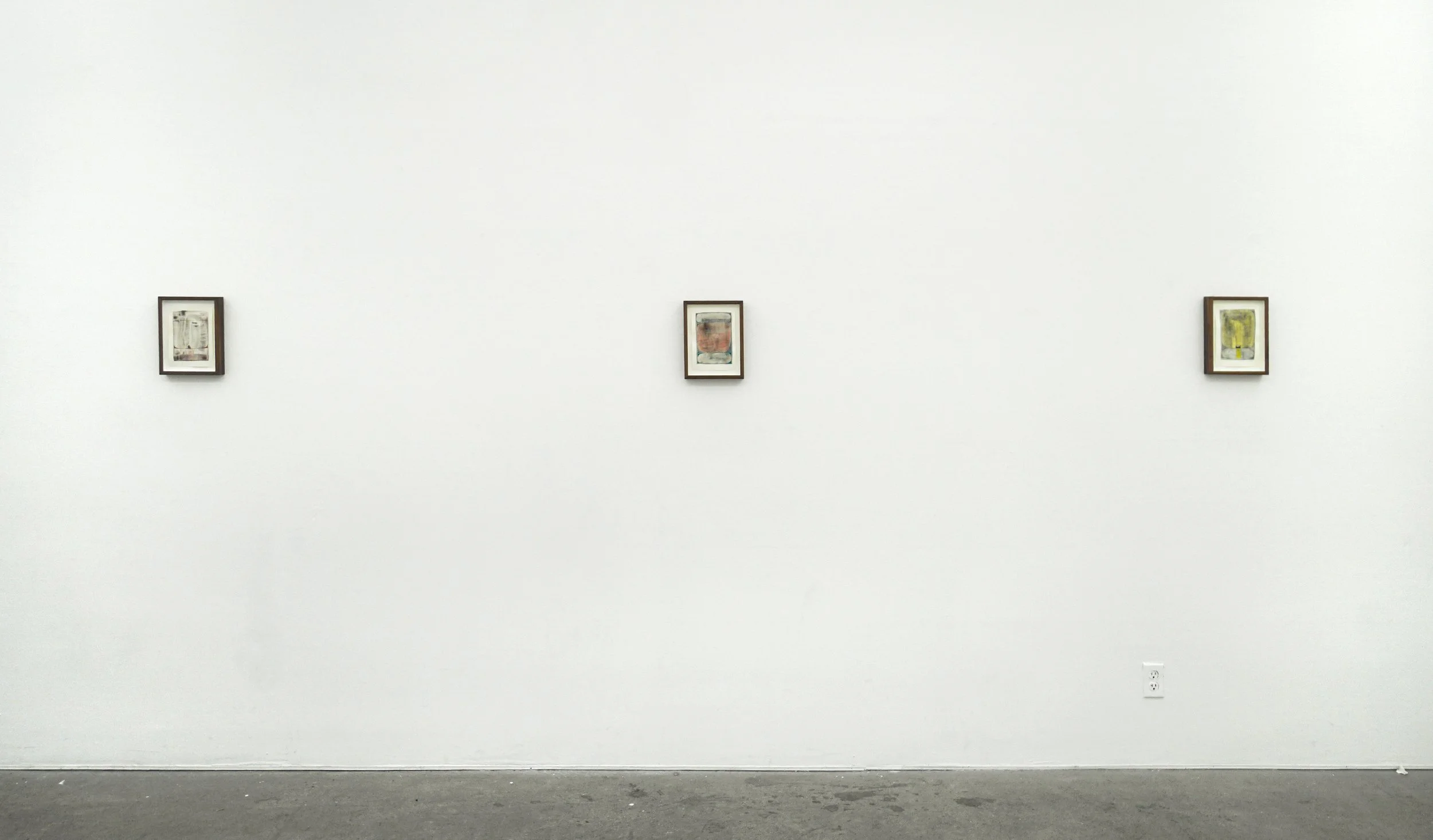
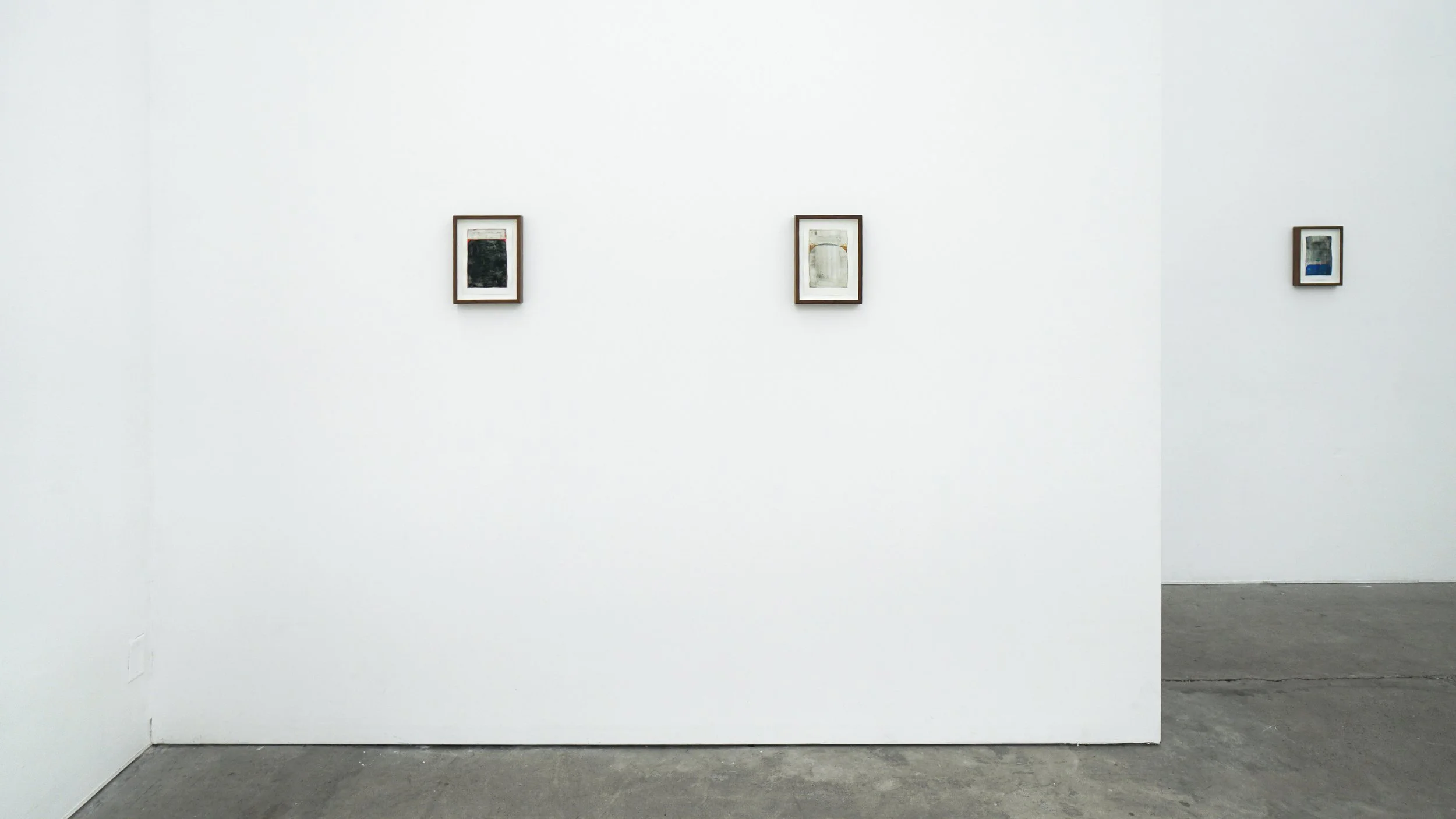
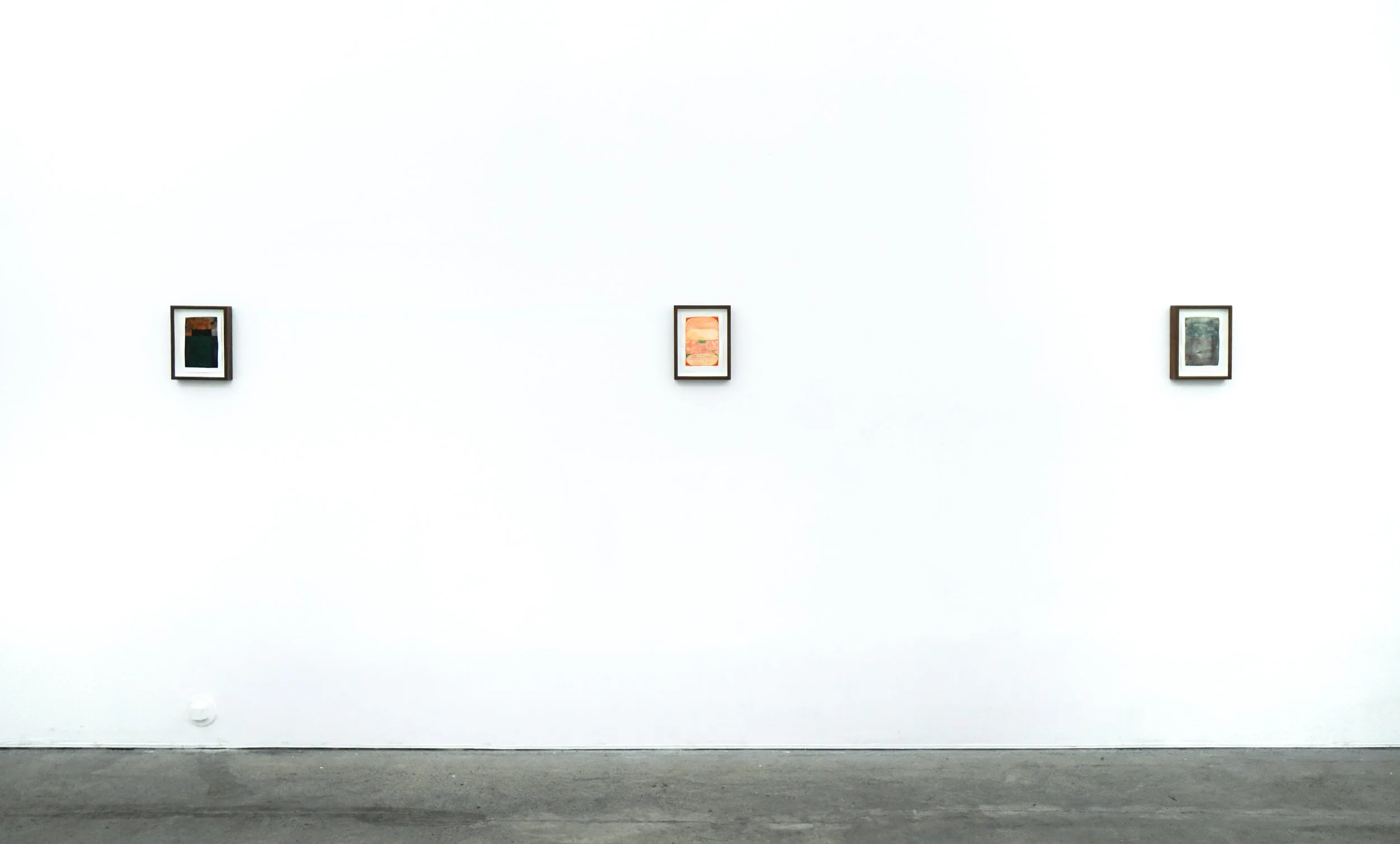
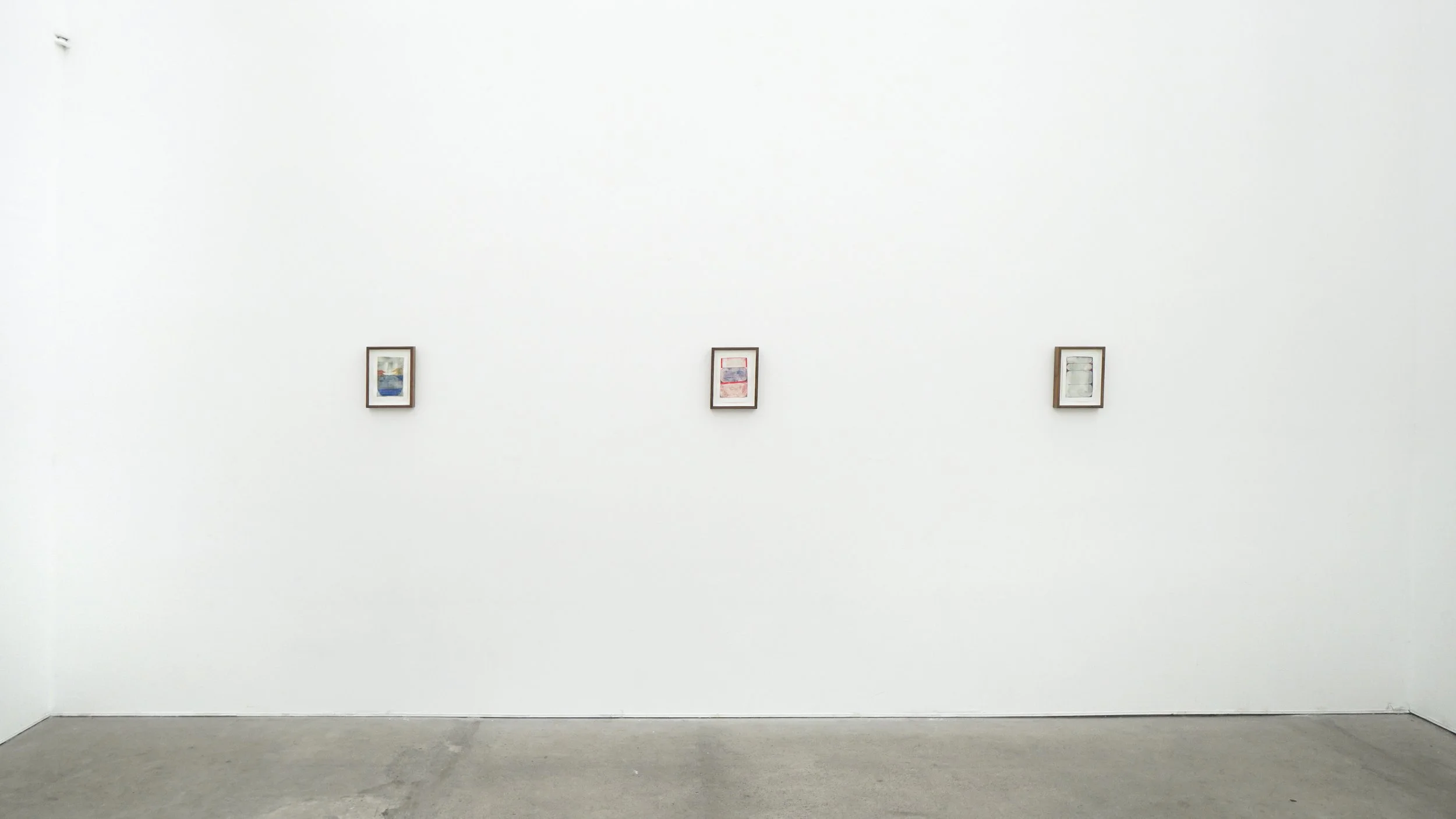
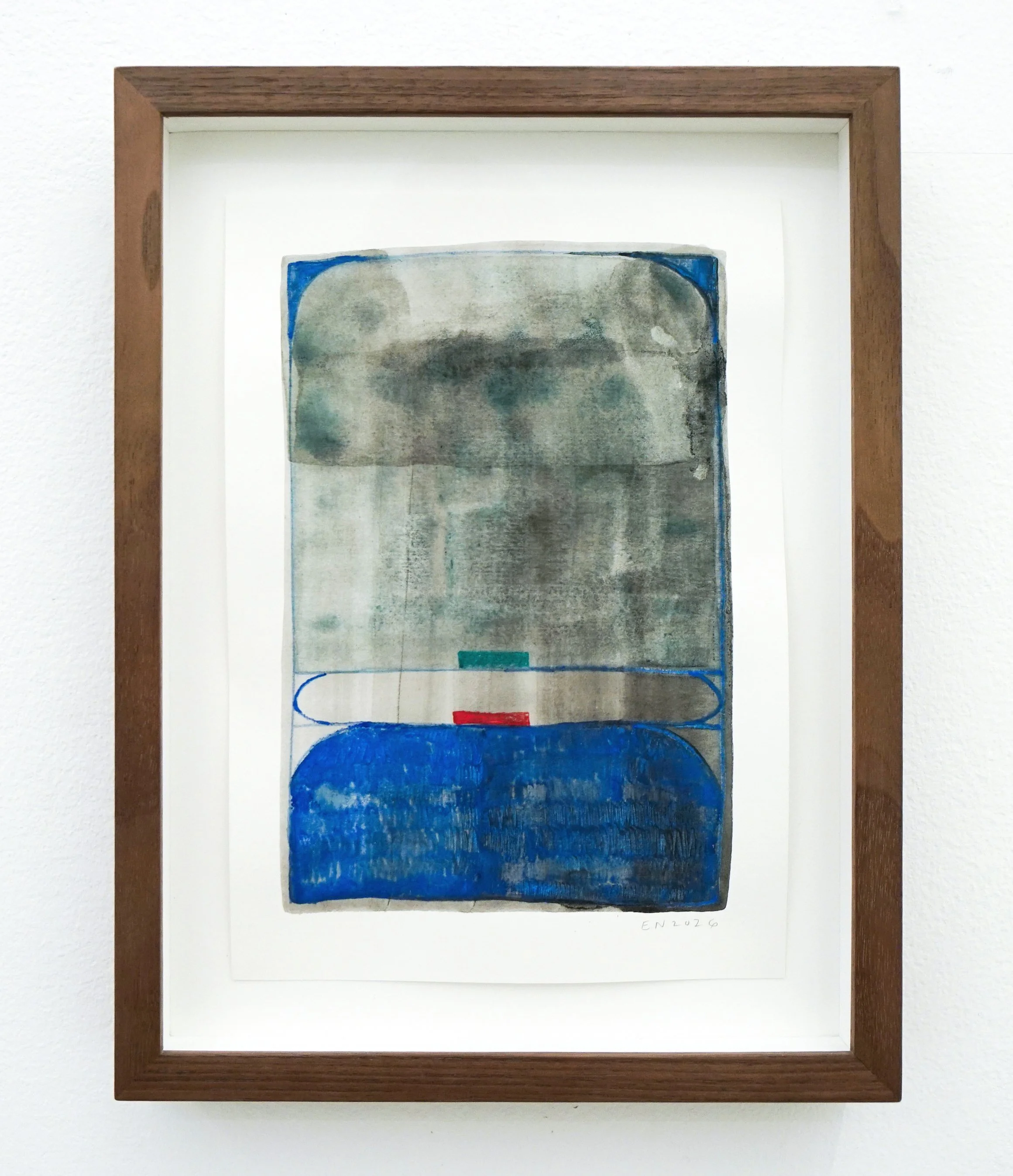
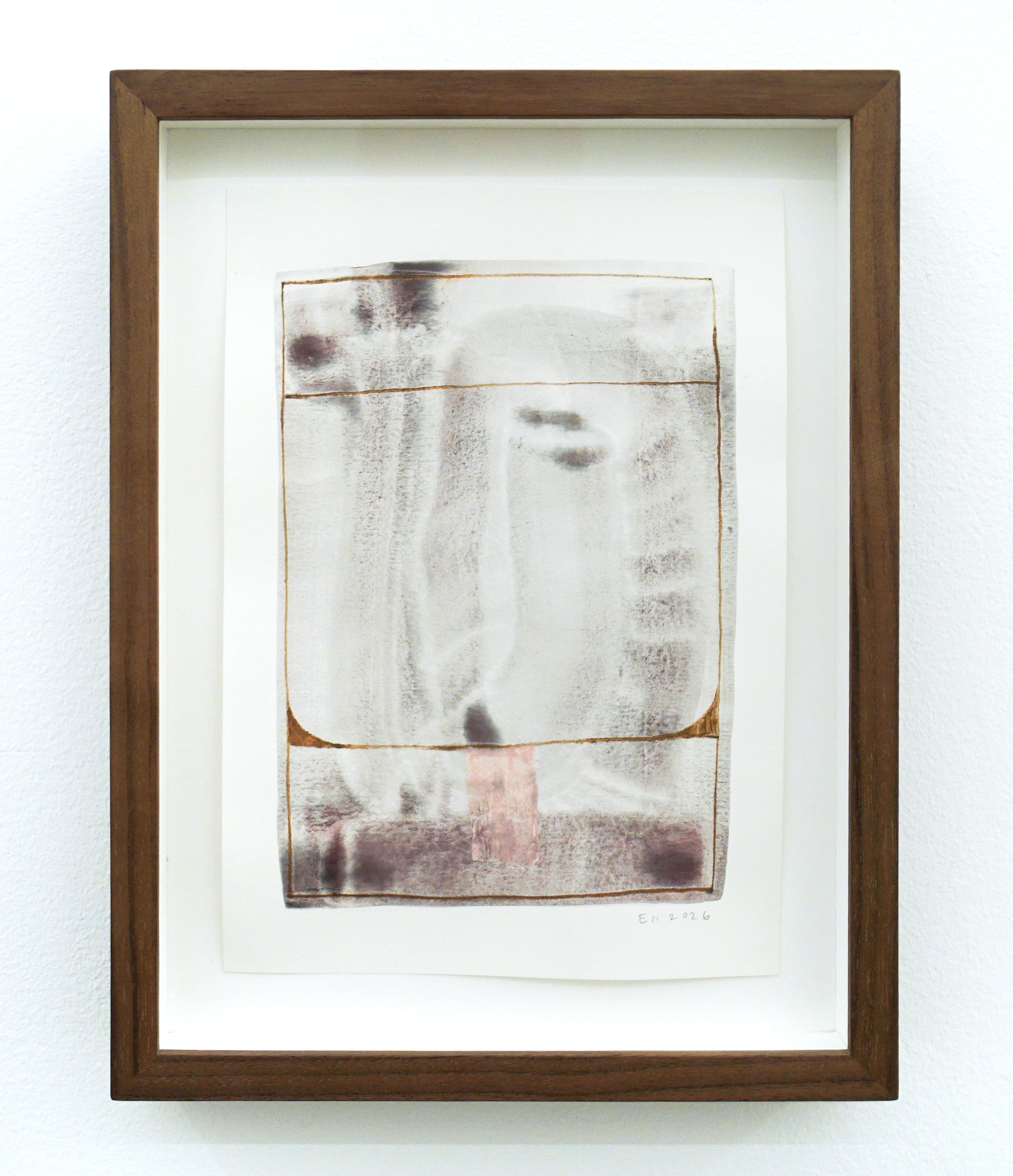
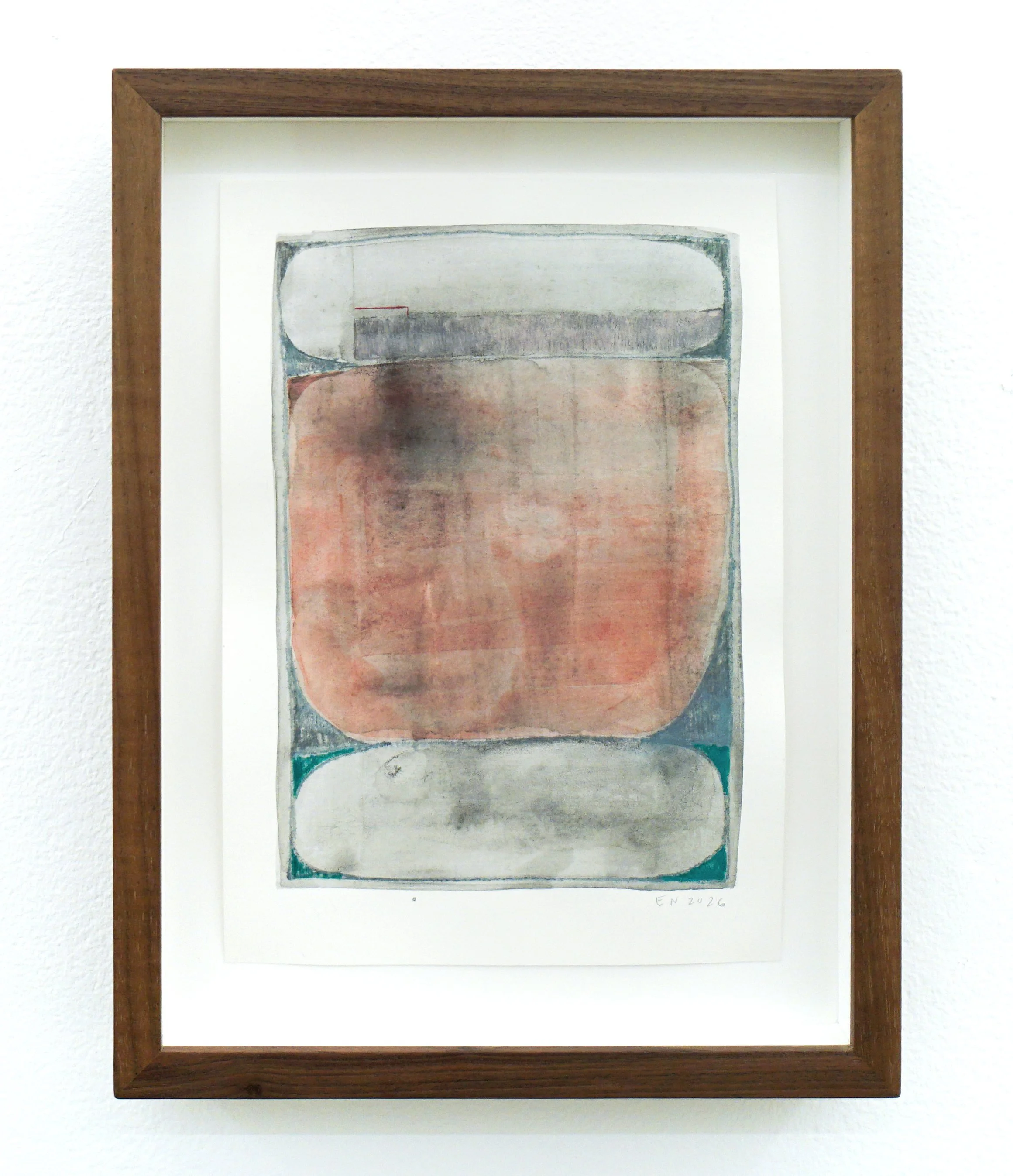
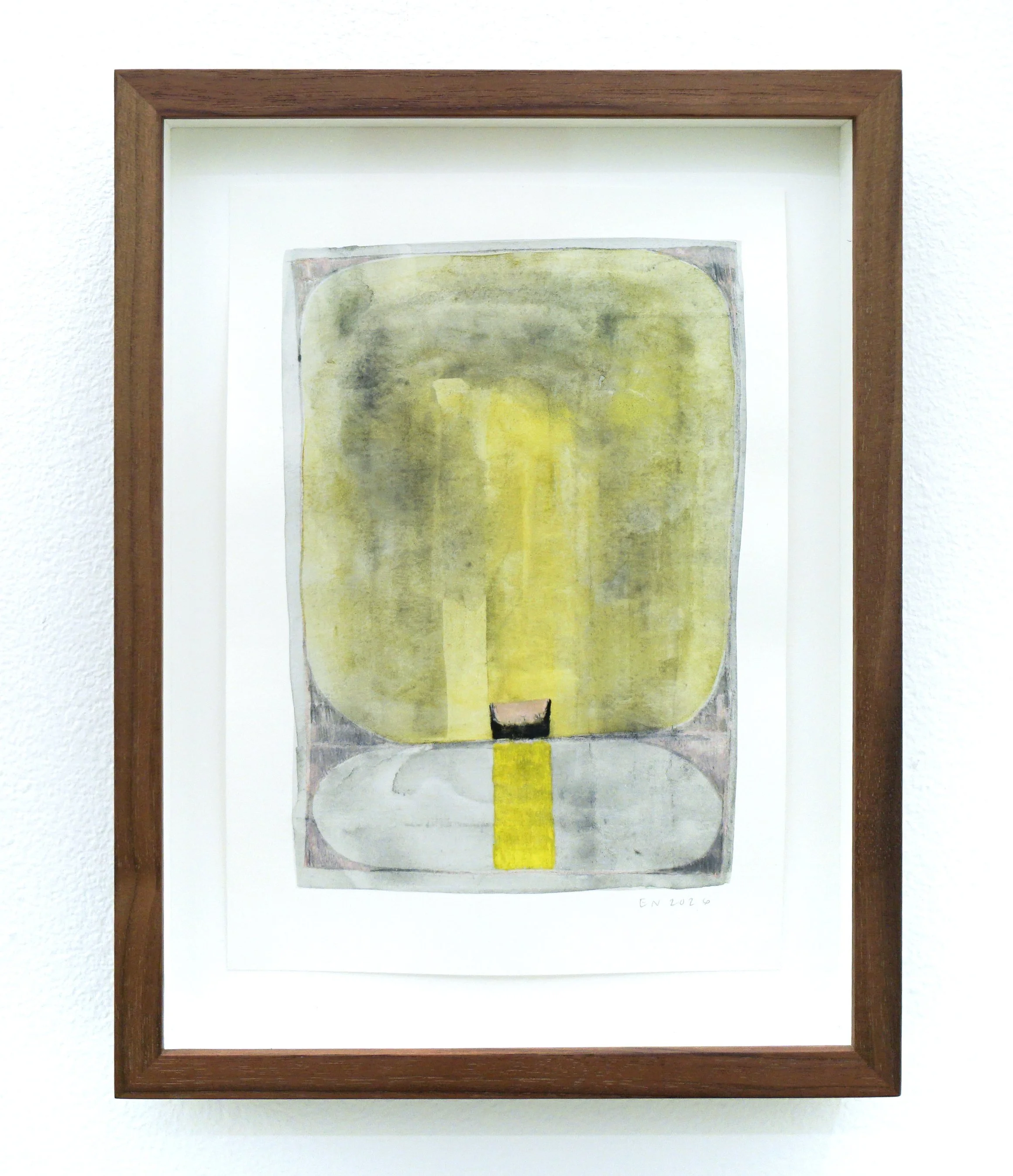
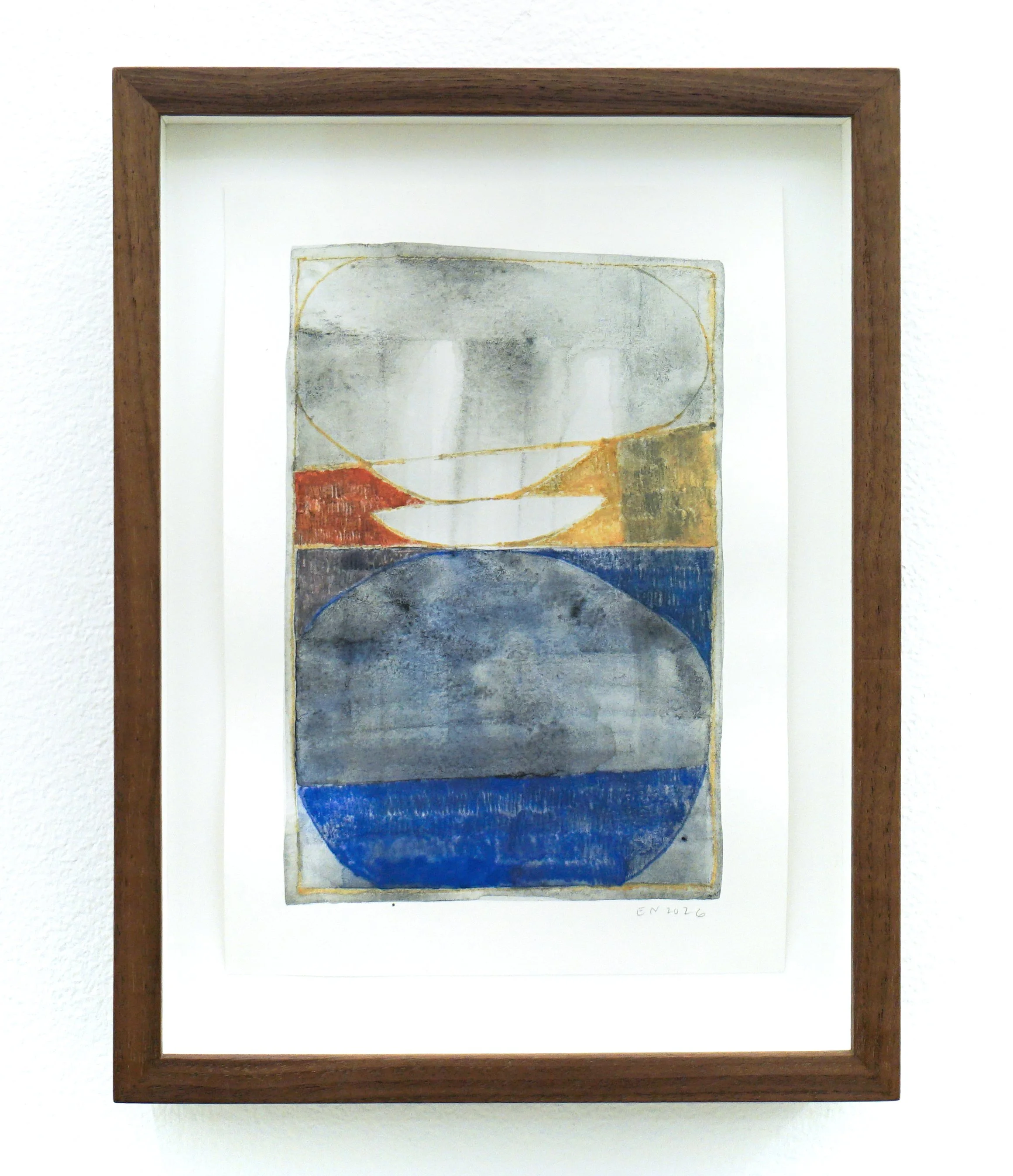
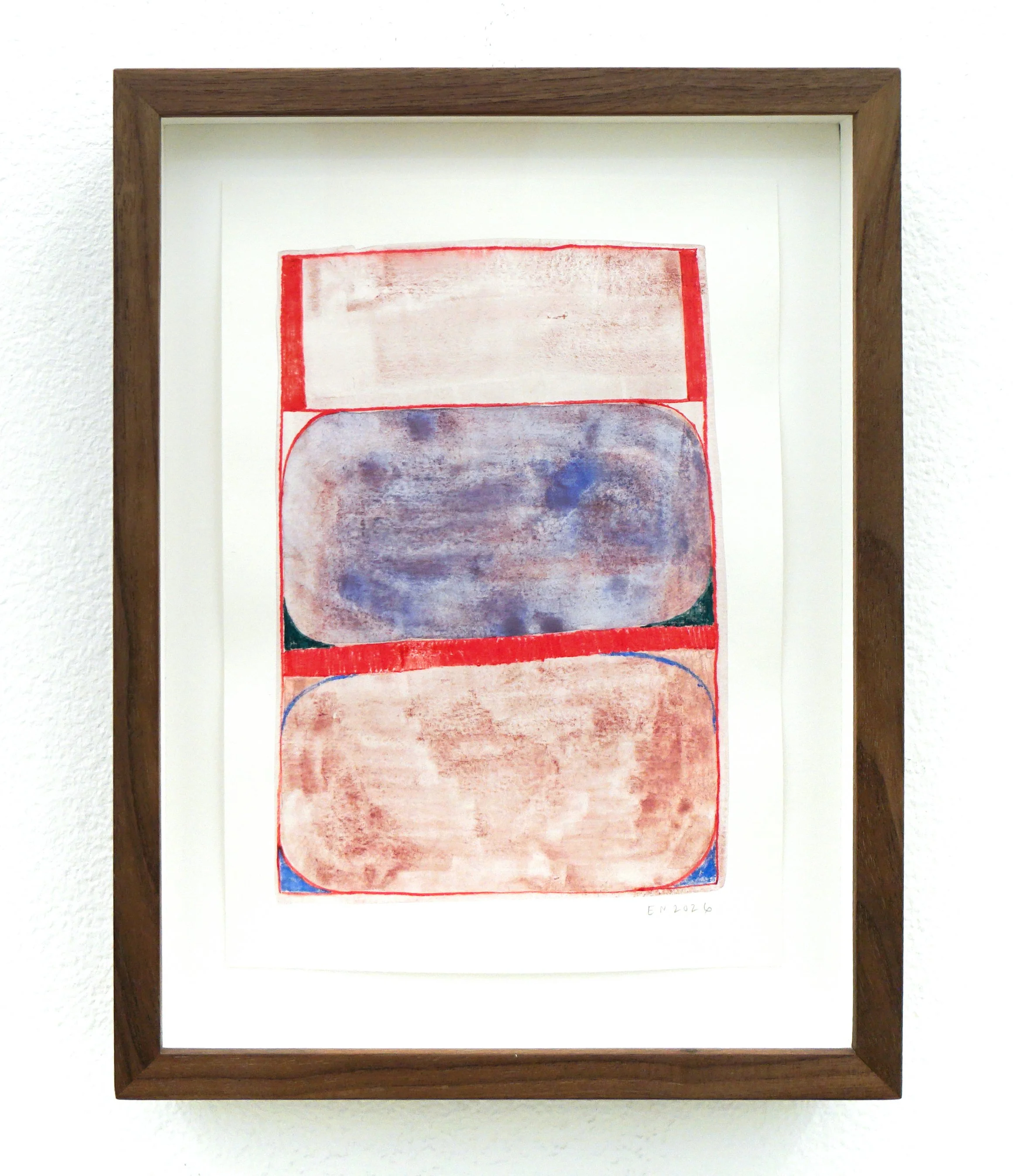
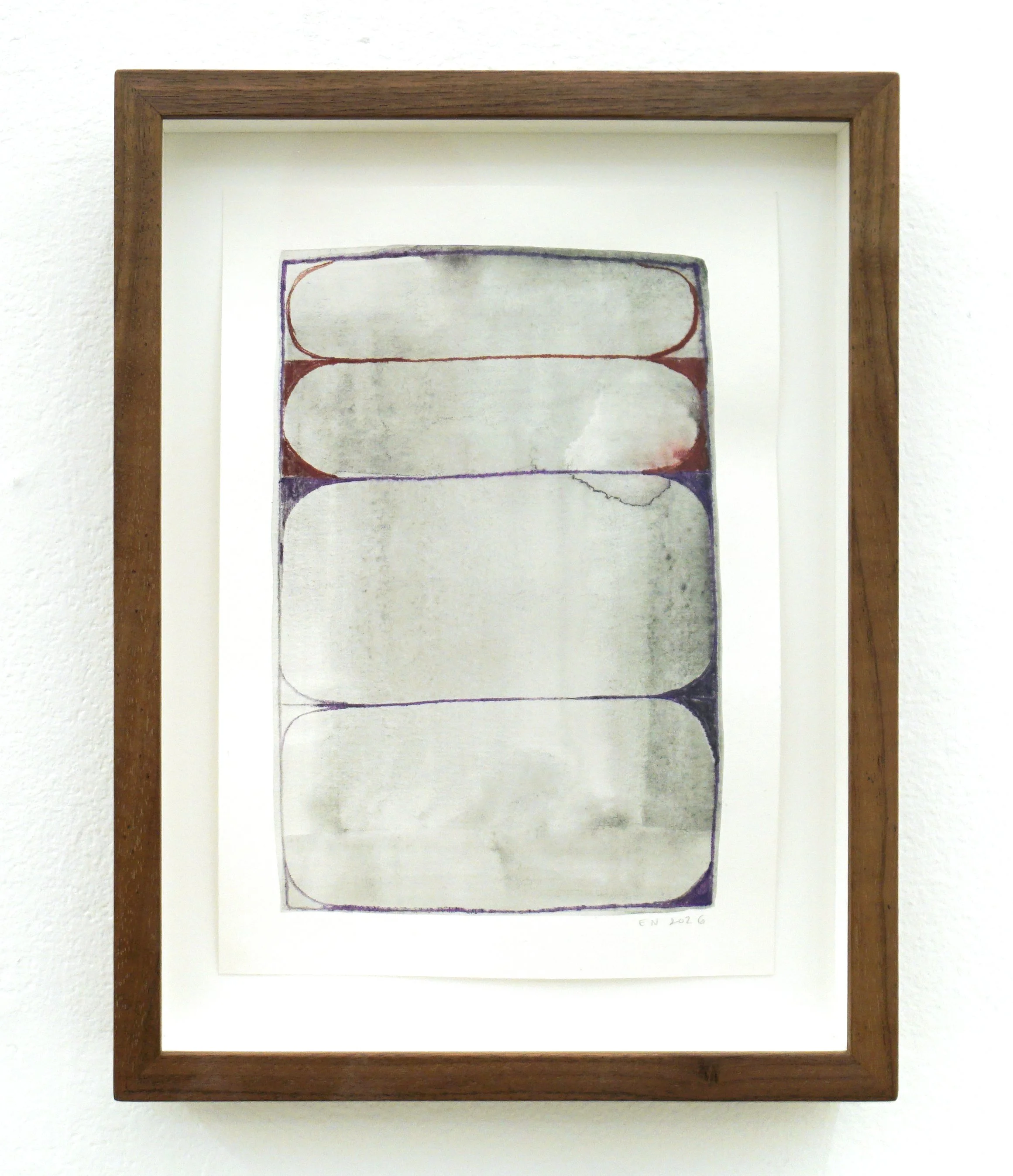
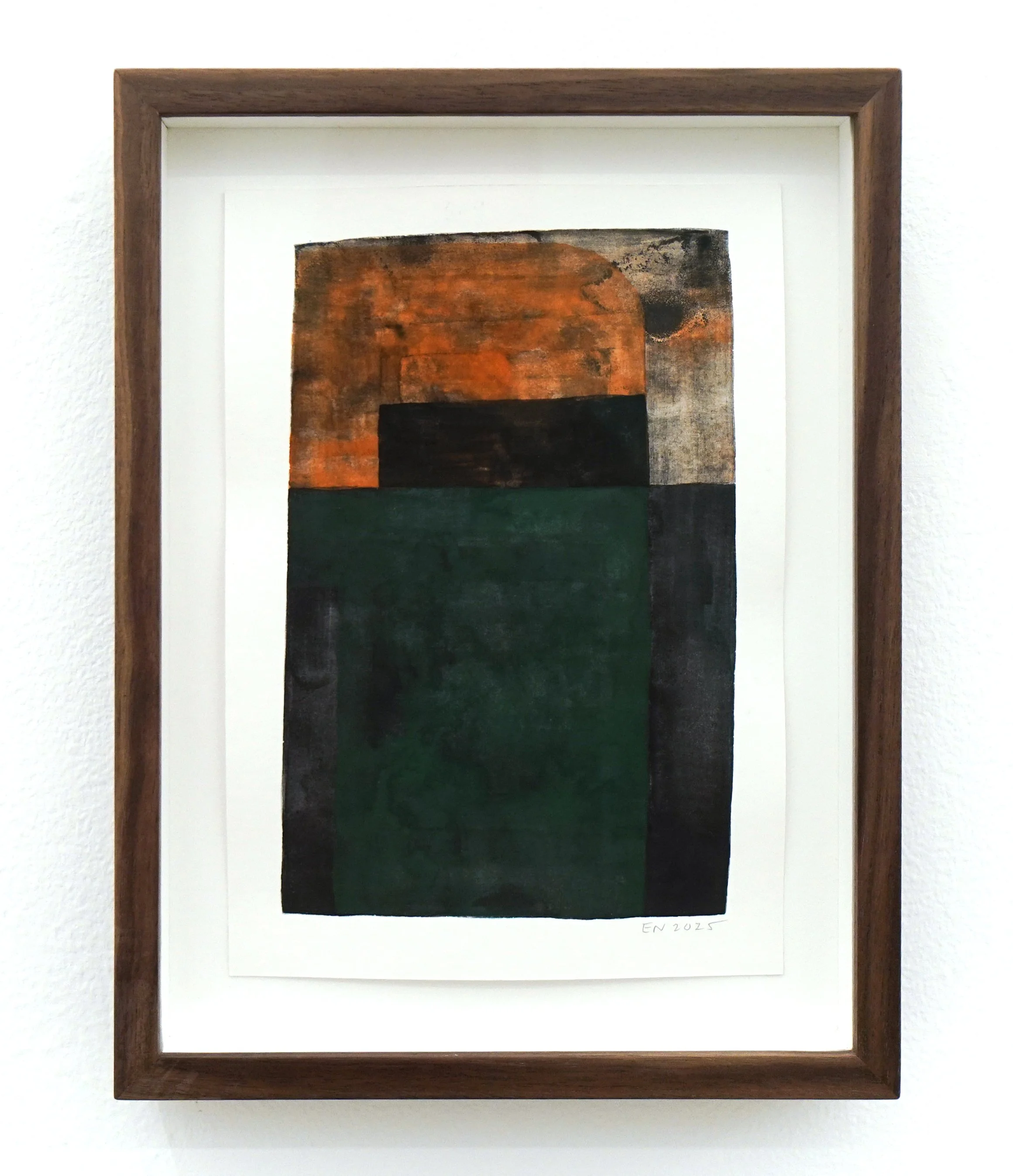
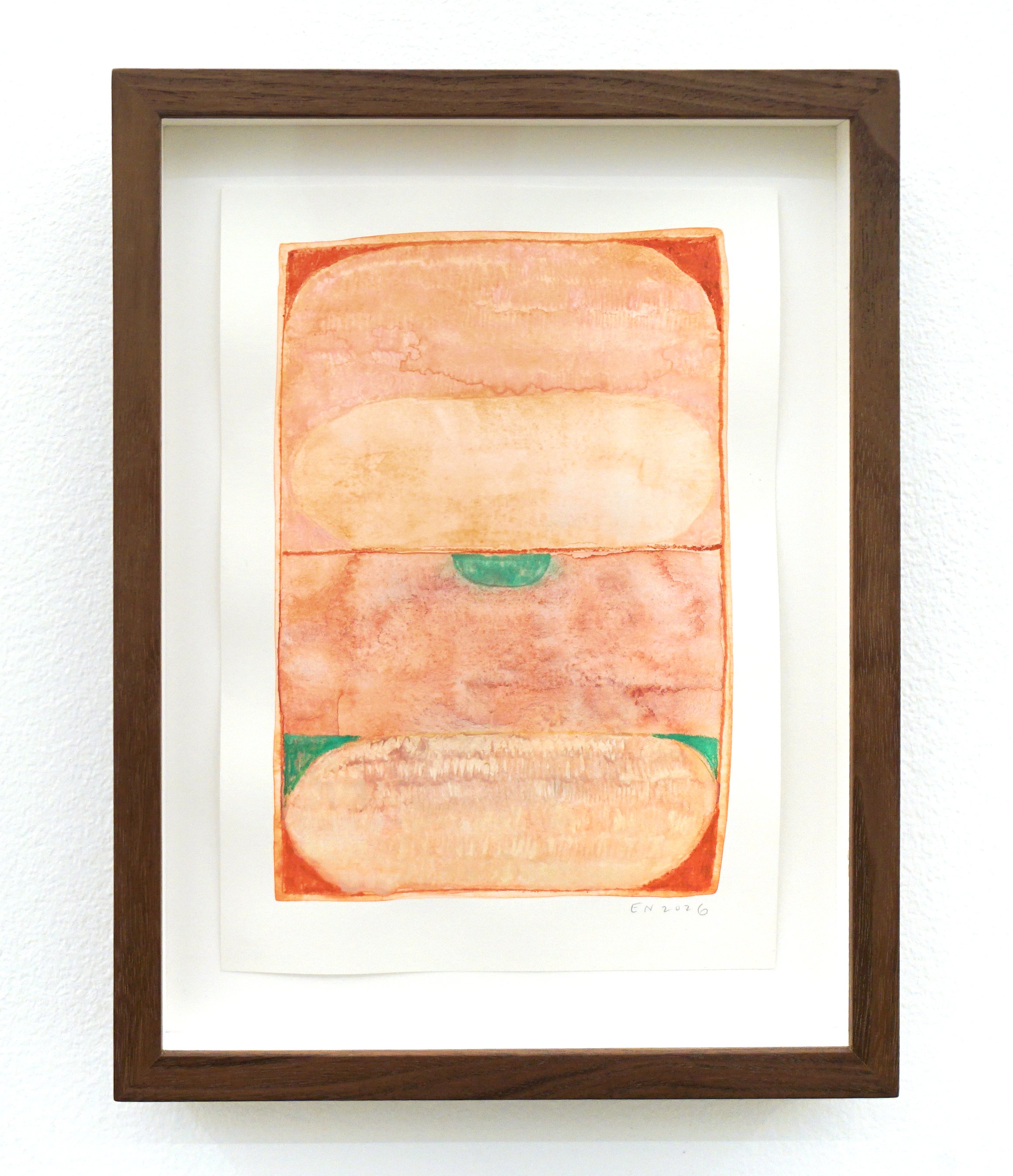
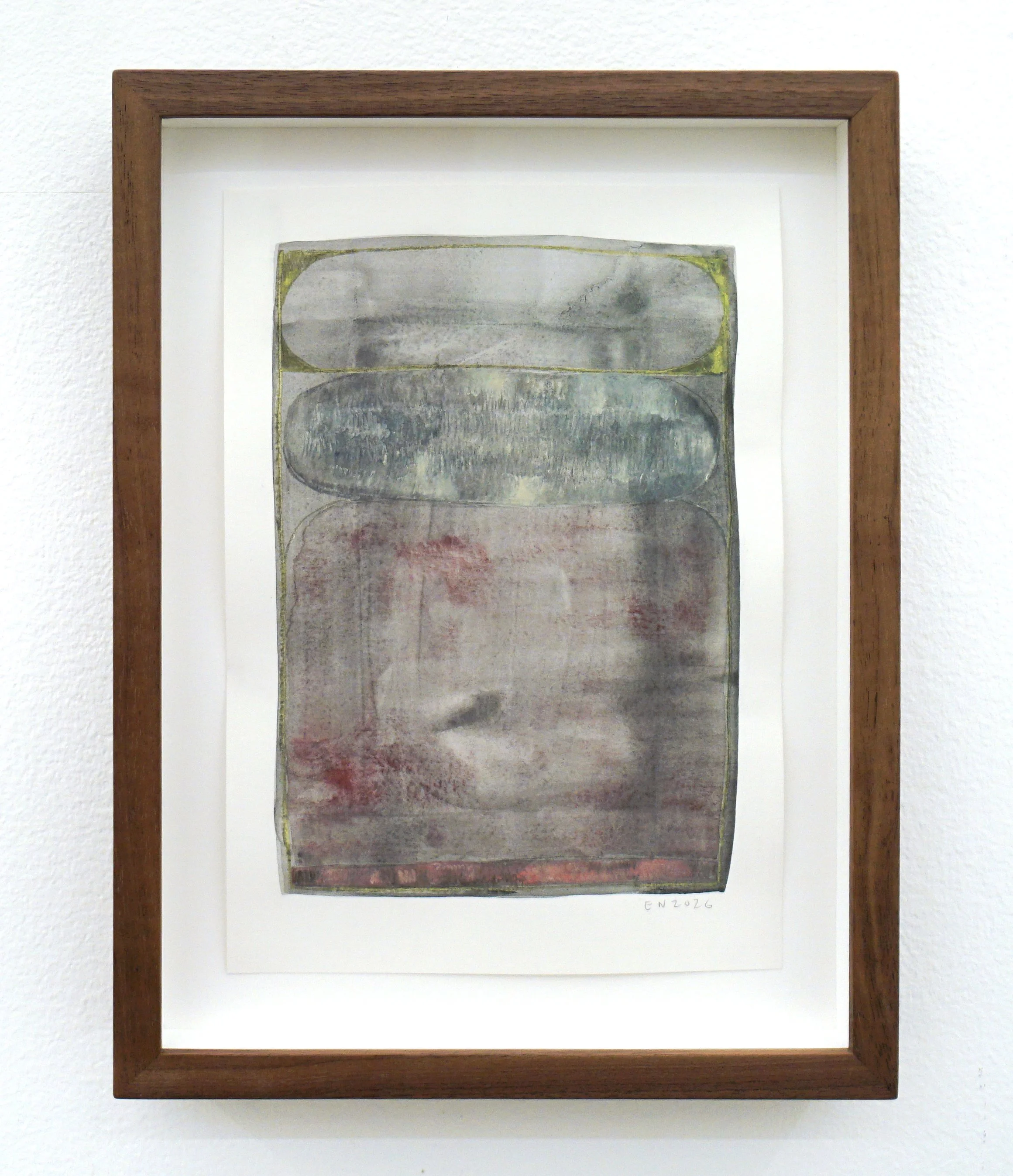
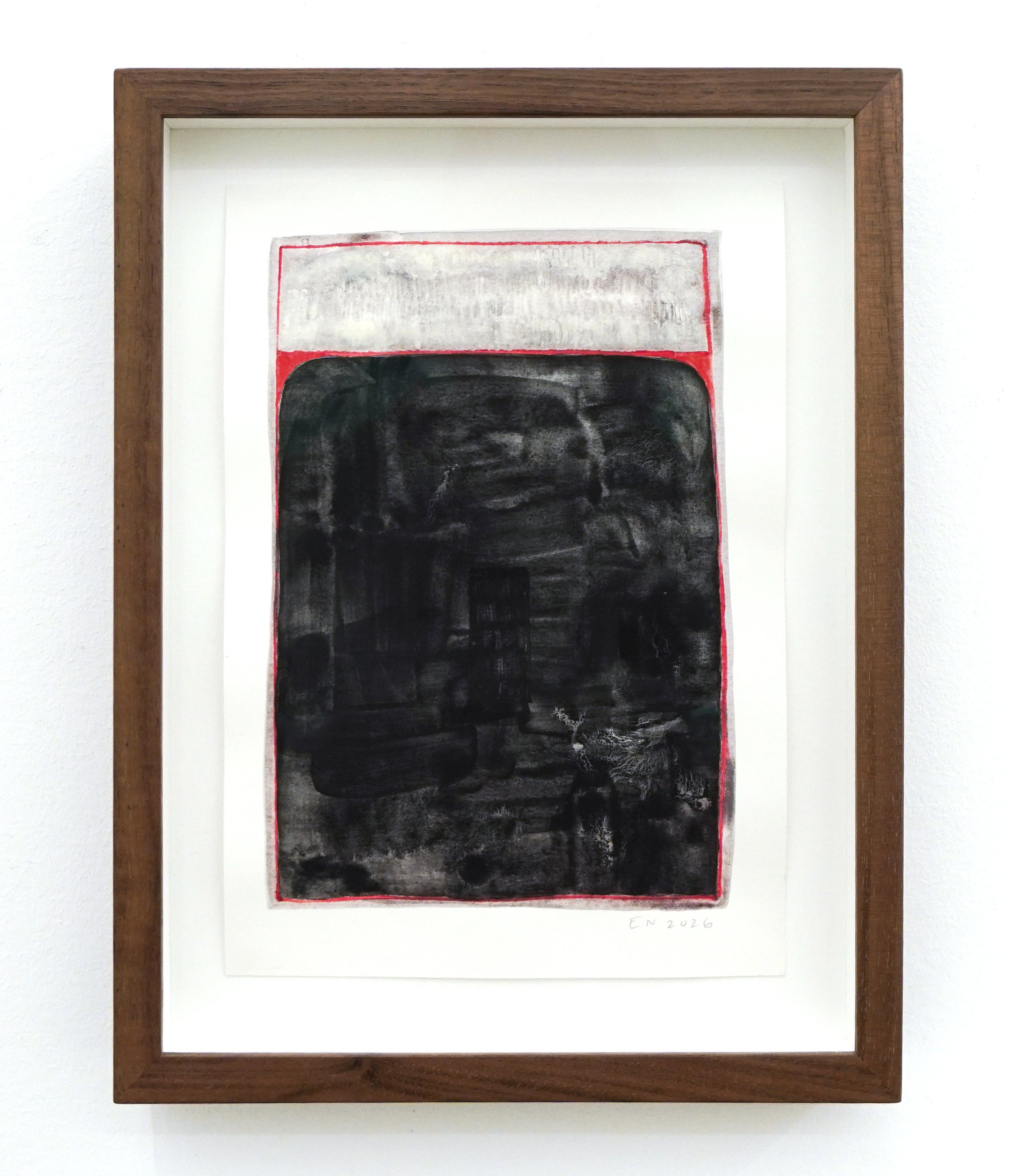
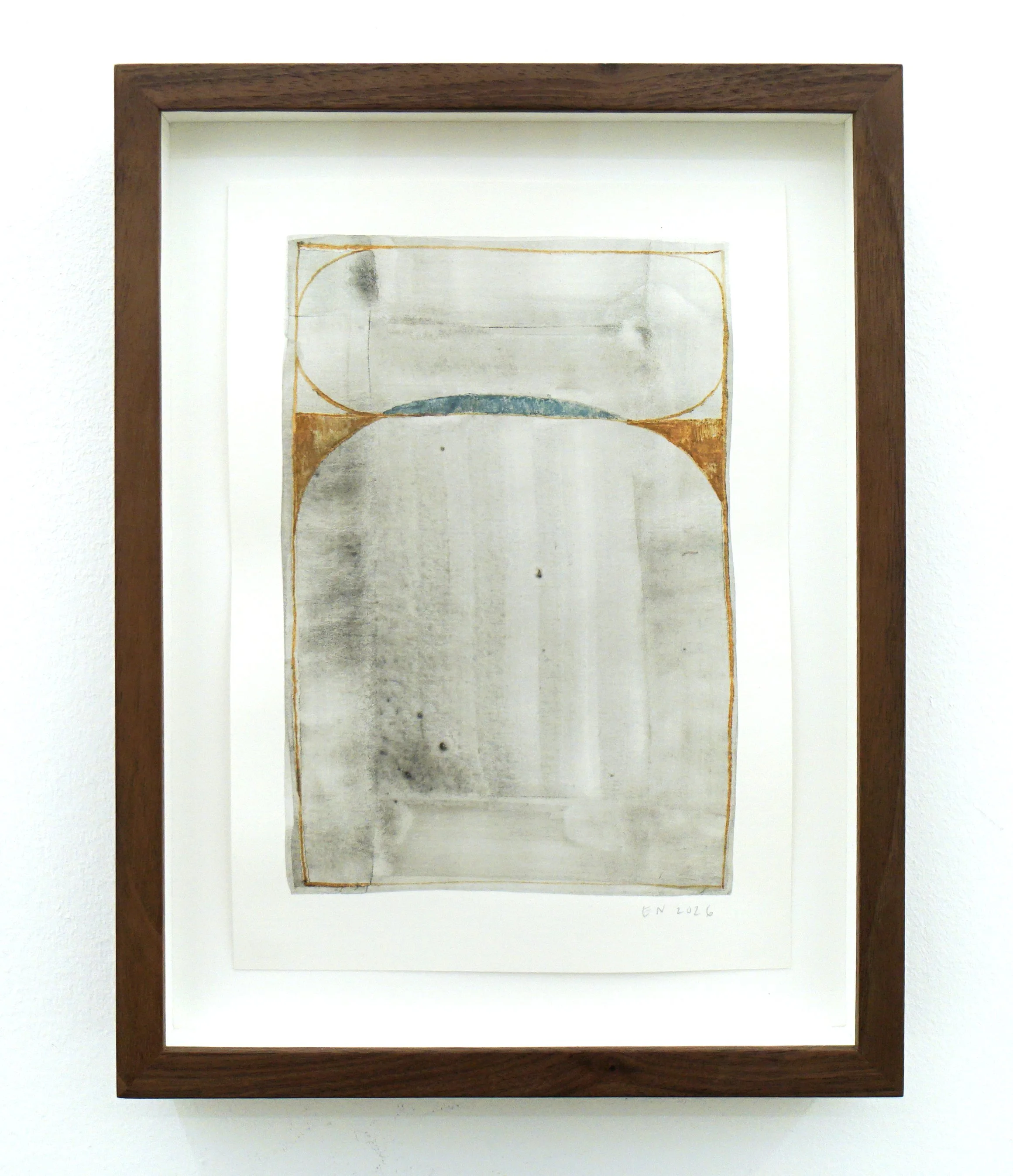
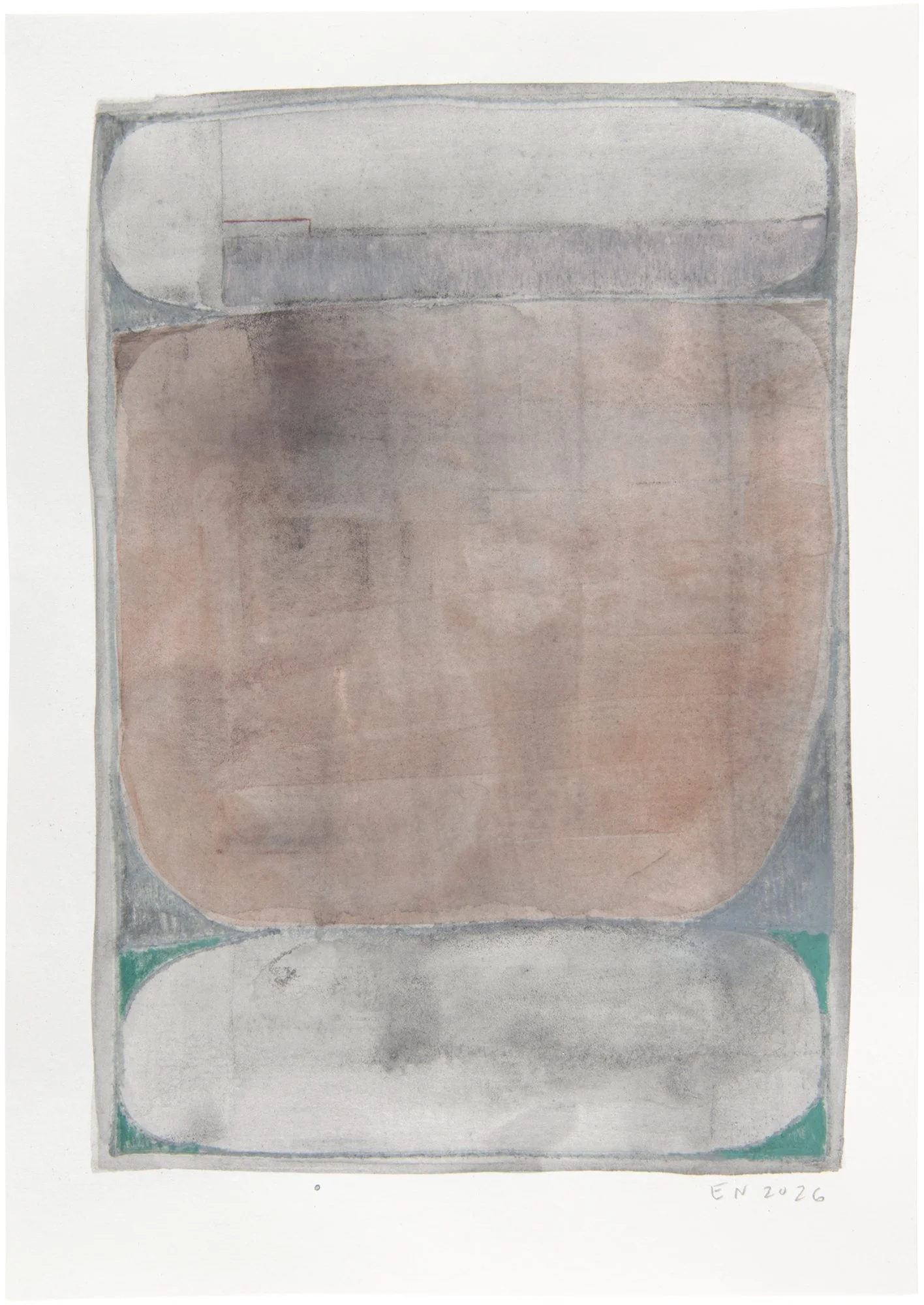
Elisabeth has impressed upon me that her paintings come from a part of her that has no language. If we were ancient Greeks, we might imagine this part as an actual place, maybe one that travels around her body, all over its cavities and surfaces and even a short distance away from it at times, highly susceptible as it is to spatial and volumetric shifts. Maybe this place, in certain moments when the afternoon light is slanting down from the hills, would look like what the paintings look like. Because they are wavy, because Elisabeth made them on what she describes as “not officially watercolor paper” and didn’t flatten them (because she didn’t feel like it and also because it seemed right that they not be flat, which is maybe why she didn’t feel like it), we can more easily imagine them as depictions of three-dimensional spaces. Rooms, for example, that we might wander into, lost in discussion and not paying all that much attention to that fourth dimension, time, which is, like us, always moving. Or so I imagine.
I walk up Twin Peaks to put myself between the ocean and the bay. This is the opening sentence of “Dioramas,” the first piece of Elisabeth’s I encountered as her editor, when I was at Open Space, in 2017, when Elisabeth for me was an artist living in San Francisco, not yet one of the people I love most in this city. Then, as now: Elisabeth walking, in relation to something above and something below. Her linguistic snapshots of details big and small alternate with digital (two-dimensional) dioramas, visual snapshots of the Bay Area. If you were walking with Elisabeth, she would be paying attention like this, pointing respectfully, not touching (maybe just a few of the blackberries). Maybe you would see, or even feel, the dense air massing over the ocean, creating an atmospheric layer cake; depending, again, on the quality of the light, this cake might be shot through or even infused with fantastical pinks, yellows, blues. If you were alone, in which case probably on your phone, you might not notice any of this, but some of it would certainly notice you. You would be in relationship with everything around you, whether you were interested in those relationships or not.
We keep repeating things, all of us. As if we’re trying to explain something to ourselves, or maybe just remember it, like the notes Elisabeth writes to herself on scrap paper when she’s in the shower, sticking them to the damp wall as a temporary measure so that when she later dries them out they are also not flat. I don’t know what part of her body these notes come from, whether because she also doesn’t know, or simply hasn’t thought to tell me. Maybe they are just passing through, and this is why they have to be written down. It’s nice how much art is contained within the body. All art is derived from the body. There are interesting notes everywhere. That’s Elisabeth, again, in “A Body That’s All Surface,” published on The Back Room in 2024. You see, she has already written everything that needs to be explained here, to herself and others.
The ancient Greeks also thought up utopias, not like the ridiculous, astonishing early Americans who insisted on making them some place, but as no place: something perfect, and therefore impractical, maybe even imaginary, like your friends, like your thoughts, like the art you make when you aren’t making other things. An idea for another way of being, in which collaboration is the dominant force.
If things are delicate enough, they can coexist without getting in each other’s way. They might even enjoy their proximity. All sorts of outcomes are possible. It’s like when humans and wild animals become friends, they have to settle for quantum entanglement. I suppose this is true even when they aren’t friends. But that’s not what we’re talking about, not in this room, anyway, which is like a heart, in that each can get terribly lonely.
There’s something moving so lightly over your skin, a waveform maybe. It doesn’t understand your boundaries, or its own. But that’s only because it’s interested in you.
—
Claudia La Rocco’s books include the novella Drive By, published by Elisabeth Nicula’s Smooth Friend, and Constellations Are Totally Imaginary Things, a collection of miscellanea forthcoming from Soberscove Press. She collaborates frequently on interdisciplinary projects, including animals & giraffes, the improvisation collective she leads with musician/composer Phillip Greenlief.